©AP Photo/Javier Torres
Vocabulary:
I will read the words, meanings, and sample sentences. Then, repeat after me.
- acute /uh-KYOOT/
[adjective] – very serious or severe
The region faced an acute shortage of emergency supplies. - logistical /luh-JIS-ti-kuhl/
[adjective] – relating to planning and organization
Logistical delays slowed equipment delivery. - suppression /suh-PRESH-uhn/
[noun] – the act of stopping or controlling something
Firefighters relied on aerial suppression to slow the spread of the flames. - preventive /pri-VEN-tiv/
[adjective] – intended to stop something before it happens
Curfews served as a preventive safety measure. - volatile /VOL-uh-til/
[adjective] – likely to change suddenly
Volatile weather patterns alarmed scientists.
Article Reading:
Please read the whole article. Then, I will check your pronunciation and intonation.
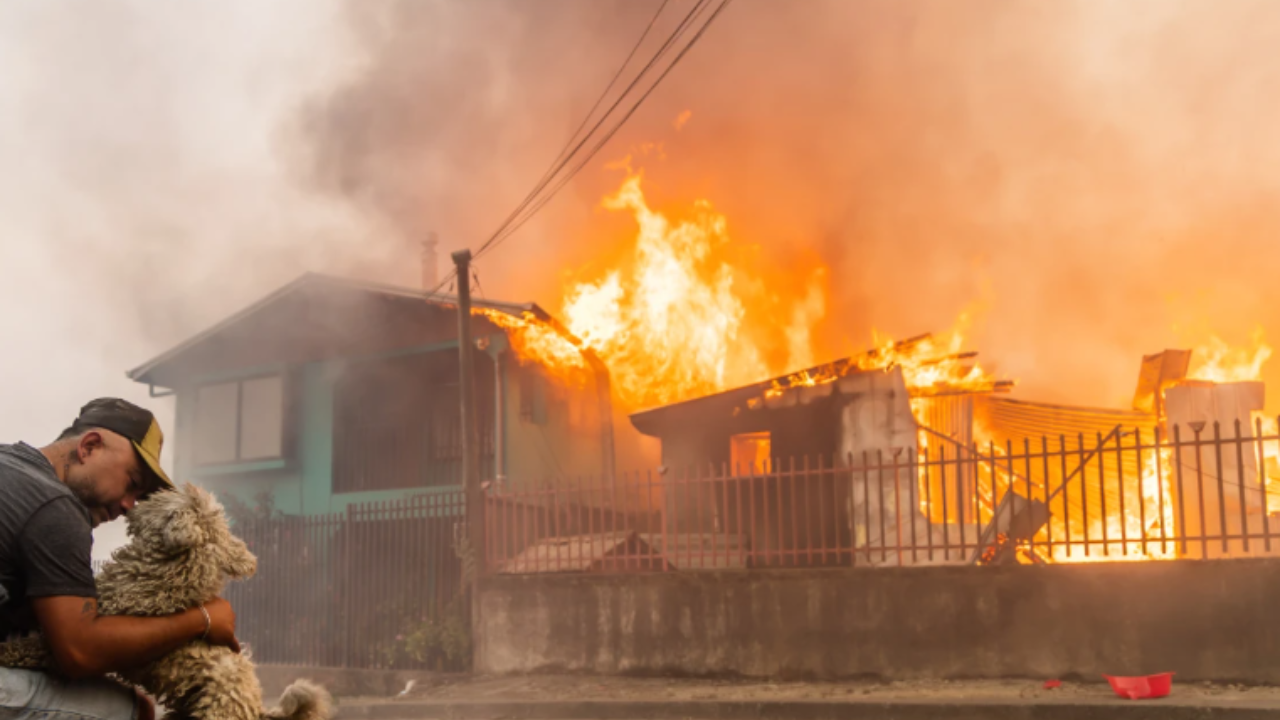
Wildfires across central and southern Chile intensified on January 18, 2026, burning vast forest areas and destroying residential zones as extreme heat continued to strain emergency response systems, according to national authorities. President Gabriel Boric declared a state of catastrophe in the Biobío and Ñuble regions, approximately 500 kilometers south of Santiago, enabling expanded coordination with security forces. Officials reported that more than two dozen active fires had burned over 8,500 hectares, displacing tens of thousands of residents. Analysts described the situation as acute, noting that rising temperatures and dry terrain created conditions that accelerated fire spread beyond initial projections.
Government briefings emphasized that early damage figures were likely incomplete, as access to affected zones remained limited. Boric acknowledged public frustration over response delays and stressed that containment efforts remained the central priority. Local leaders said evacuation orders were issued under rapidly changing circumstances, contributing to logistical difficulties. Fire crews faced compounding challenges as strong winds undermined aerial suppression, while prolonged drought weakened natural firebreaks. Emergency officials imposed curfews to reduce civilian movement and support rescue operations, calling the measure a preventive step amid ongoing assessments. Climate specialists warned that seasonal patterns had become increasingly volatile, raising concerns about long-term preparedness as similar disasters intensify across South America during peak summer months.
Government briefings emphasized that early damage figures were likely incomplete, as access to affected zones remained limited. Boric acknowledged public frustration over response delays and stressed that containment efforts remained the central priority. Local leaders said evacuation orders were issued under rapidly changing circumstances, contributing to logistical difficulties. Fire crews faced compounding challenges as strong winds undermined aerial suppression, while prolonged drought weakened natural firebreaks. Emergency officials imposed curfews to reduce civilian movement and support rescue operations, calling the measure a preventive step amid ongoing assessments. Climate specialists warned that seasonal patterns had become increasingly volatile, raising concerns about long-term preparedness as similar disasters intensify across South America during peak summer months.
Discussion Questions:
I will read each question. Then, please answer them.
- What wildfire impacts have been seen in the community, if any? If so, how were people affected? If not, what preparations exist?
- What emergency delays have been seen in the community, if any? If so, why? If not, how are responses managed
- Do curfews help manage disaster response effectively?
- How should governments adapt to increasingly volatile climates?
- What long-term policies could reduce wildfire damage?
Summarization:
Please summarize the whole article using your own words and expressions. You will have one minute to prepare before you answer.
Describe:
Please explain the definition of each word listed below based on your understanding. You can provide example sentences if needed.
- extreme
- resident
- initial
- official
- peak