©(AP Photo/Misper Apawu)
Vocabulary:
I will read the words, meanings, and sample sentences. Then, repeat after me.
- elite /ih-LEET/
[adjective] – belonging to the highest level or best group
The company hired elite workers with strong technical skills. - dimension /dih-MEN-shuhn/
[noun] – one important part or aspect of something
The project added a new dimension to the company’s marketing plan. - volatile /VOL-uh-tl/
[adjective] – likely to change quickly and unpredictably
The weather in the region is volatile during the rainy season. - reconcile /REK-uhn-sahyl/
[verb] – to restore friendly relations after a disagreement
The teacher helped the students reconcile during group work. - tactical /TAK-ti-kuhl/
[adjective] – relating to careful planning to achieve a specific goal
The team used a tactical plan to finish the project on time.
Article Reading:
Please read the whole article. Then, I will check your pronunciation and intonation.
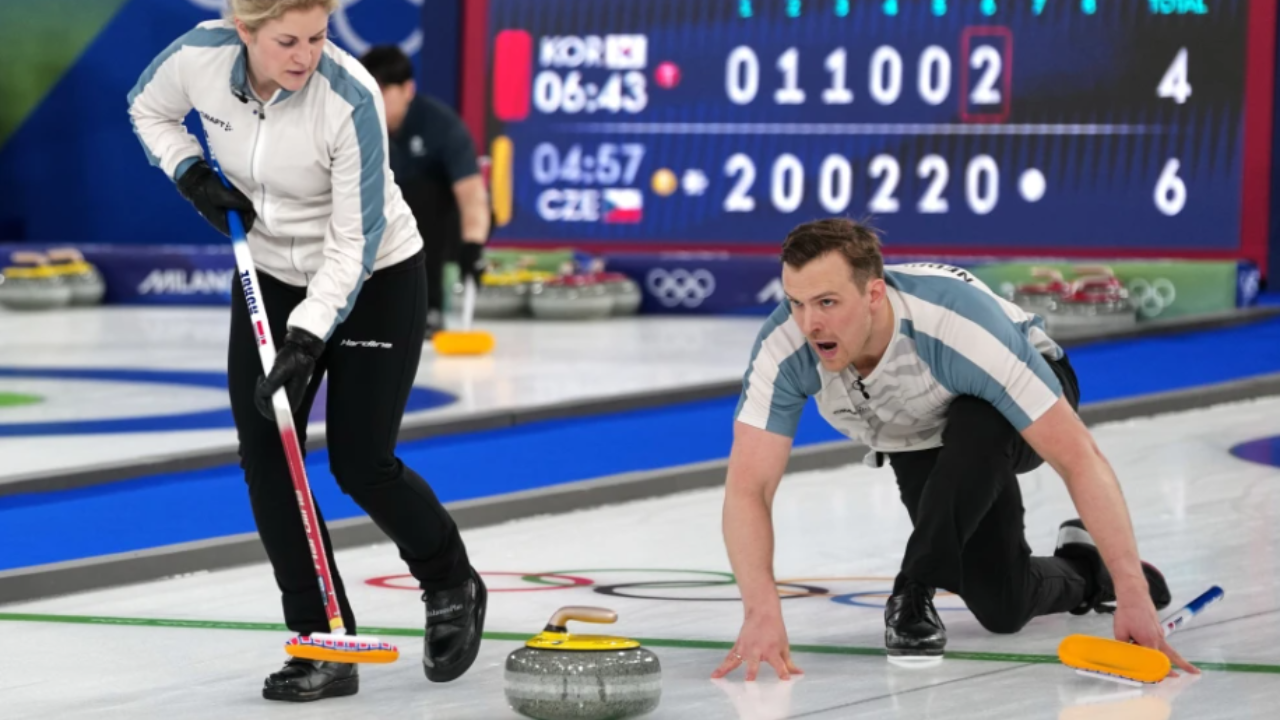
Mixed doubles curling at the Milan Cortina Winter Games has shown how personal relationships can affect performance in elite sports. The competition is taking place at the Olympic Ice Stadium in Italy, where teams of two compete under pressure. Several teams are made up of married couples or close family members, which adds a unique dimension to the event. Norway’s Kristin Skaslien and Magnus Nedregotten, bronze medalists from the 2018 Winter Olympics, attracted attention because of visible tension during matches. Sports analysts explained that curling requires constant discussion after every throw, making emotional control essential. As the tournament moved closer to the semifinals, stress increased, and communication became a decisive factor. Experts noted that this pressure can amplify small disagreements, creating a volatile atmosphere during high-level competition.
Other teams have demonstrated different ways to manage these demands. Canada’s Jocelyn Peterman and Brett Gallant maintained a composed approach, while Switzerland’s Yannick Schwaller and Briar Schwaller-Hürlimann balanced Olympic competition with caring for a young child. Sweden’s sibling team, Rasmus and Isabella Wranå, showed how family experience can help resolve conflict more quickly. Coaches explained that siblings often reconcile faster due to long-standing bonds. Every decision is scrutinized by partners and officials. Recent developments such as advanced video analysis and ice condition monitoring have increased tactical discussions during games. Analysts concluded that teams able to communicate clearly gain a strategic advantage, showing that cooperation and adaptability remain essential for success in mixed doubles curling.
Other teams have demonstrated different ways to manage these demands. Canada’s Jocelyn Peterman and Brett Gallant maintained a composed approach, while Switzerland’s Yannick Schwaller and Briar Schwaller-Hürlimann balanced Olympic competition with caring for a young child. Sweden’s sibling team, Rasmus and Isabella Wranå, showed how family experience can help resolve conflict more quickly. Coaches explained that siblings often reconcile faster due to long-standing bonds. Every decision is scrutinized by partners and officials. Recent developments such as advanced video analysis and ice condition monitoring have increased tactical discussions during games. Analysts concluded that teams able to communicate clearly gain a strategic advantage, showing that cooperation and adaptability remain essential for success in mixed doubles curling.
Discussion Questions:
I will read each question. Then, please answer them.
- Have you ever heard of the sport curling? If yes, what do you know about it? If not, what sports do you know that use only two players on a team?
- Have you ever worked with a family member or close friend on a team? If so, what was easy about working together? If not, who would you like to work with, and why?
- Do you agree that good communication is more important than skill in mixed doubles sports?
- How can teams control emotions when many people are watching them compete?
- What skills, other than physical ability, are important for success in team sports?
Summarization:
Please summarize the whole article using your own words and expressions. You will have one minute to prepare before you answer.
Describe:
Please explain the definition of each word listed below based on your understanding. You can provide example sentences if needed.
- relationship
- sport
- communication
- approach
- cooperation