©(AP Photo/Ross D. Franklin, File)
Vocabulary:
I will read the words, meanings, and sample sentences. Then, repeat after me.
- surveillance /ser-VEY-luhns/
[noun] – the act of watching or monitoring people or places
The company increased surveillance to prevent theft in the building. - predictive /pri-DIK-tiv/
[adjective] – able to say what may happen in the future based on information
The weather app uses predictive data to show possible storms. - suspicious /suh-SPISH-uhs/
[adjective] – causing doubt or concern that something may be wrong
The guard noticed suspicious activity near the closed store. - intrusive /in-TROO-siv/
[adjective] – entering personal space or life in an unwanted way
Many people find loud phone notifications intrusive. - ramification /ram-uh-fi-KEY-shuhn/
[noun] – a result or effect of an action, often negative
The policy change had a serious ramification for small shops.
Article Reading:
Please read the whole article. Then, I will check your pronunciation and intonation.
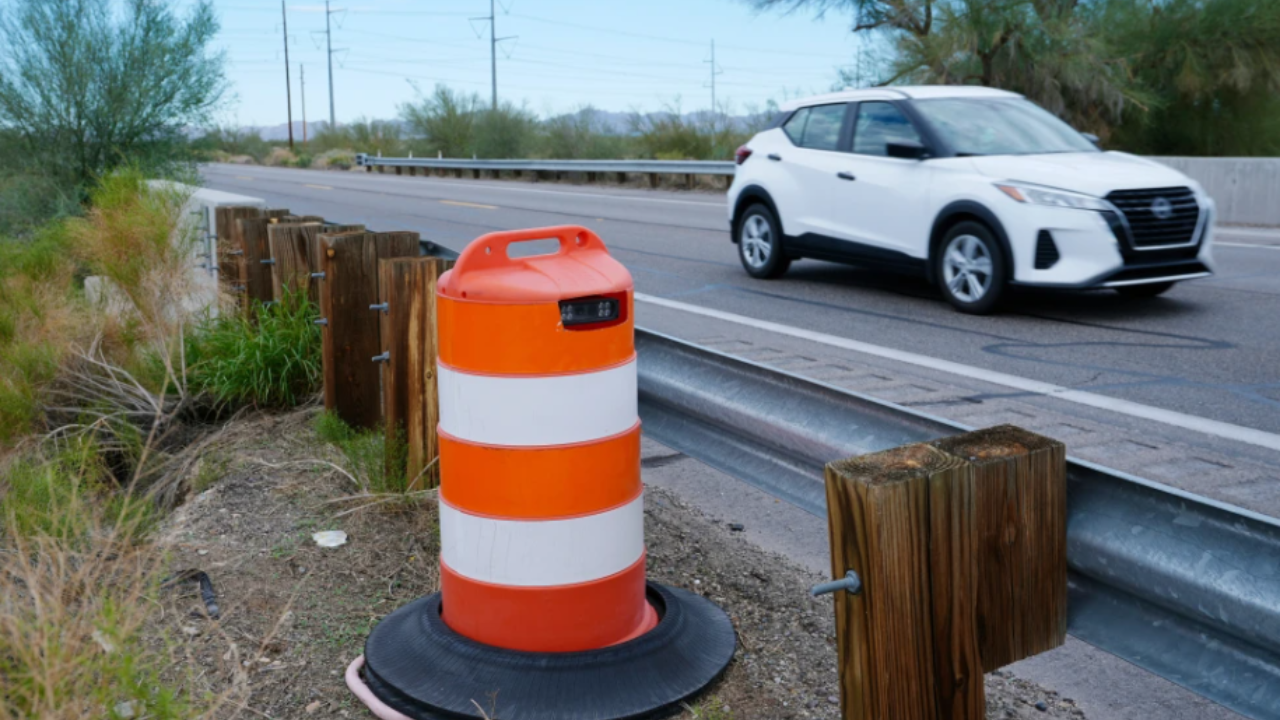
Government surveillance using license plate readers has drawn attention in the United States, especially in Southern California during the past year. The issue became public in 2024 after an investigation revealed that federal agencies placed hidden cameras along roads in San Diego and Imperial counties near the border with Mexico. The devices were installed inside traffic equipment such as construction barrels, making the surveillance difficult to detect. Advocacy groups and privacy experts expressed concern because the cameras collected data from millions of drivers without clear public notice. The technology was connected to a predictive intelligence system used by U.S. Border Patrol to study travel patterns and identify vehicles considered suspicious. The development increased legal and political scrutiny, as scholars described the program as potentially intrusive.
The system operates by recording license plate numbers, locations, and travel times, then processing the information through advanced algorithms. Court documents show that vehicles are flagged based on routes, speed, or time spent near border regions, demonstrating the expansive reach of modern data analysis. Federal agencies may share results with local police, leading to traffic stops for minor violations. Supporters state that the technology strengthens enforcement capabilities and improves national security. Critics argue that the opaque process creates significant ramifications for ordinary drivers. Recent improvements in computing power have made surveillance more efficient, but legal experts stress the importance of transparency, regulation, and oversight to ensure proportional use across multiple jurisdictions today nationwide and ongoing.
The system operates by recording license plate numbers, locations, and travel times, then processing the information through advanced algorithms. Court documents show that vehicles are flagged based on routes, speed, or time spent near border regions, demonstrating the expansive reach of modern data analysis. Federal agencies may share results with local police, leading to traffic stops for minor violations. Supporters state that the technology strengthens enforcement capabilities and improves national security. Critics argue that the opaque process creates significant ramifications for ordinary drivers. Recent improvements in computing power have made surveillance more efficient, but legal experts stress the importance of transparency, regulation, and oversight to ensure proportional use across multiple jurisdictions today nationwide and ongoing.
Discussion Questions:
I will read each question. Then, please answer them.
- Have you ever seen cameras on roads or highways in your area? If so, where did you see them and what do you think they are used for? If not, how would you feel if cameras were placed on roads near your home?
- Have you heard about drivers being stopped by police for traffic reasons? If so, what are some common reasons drivers are stopped? If not, what kind of traffic rule do drivers most often break in your area?
- Do you agree that governments should clearly explain how travel data is collected and used?
- Why do privacy groups worry about hidden cameras on public roads?
- What rules could help make surveillance systems more fair and clear?
Summarization:
Please summarize the whole article using your own words and expressions. You will have one minute to prepare before you answer.
Describe:
Please explain the definition of each word listed below based on your understanding. You can provide example sentences if needed.
- investigation
- camera
- equipment
- data
- driver