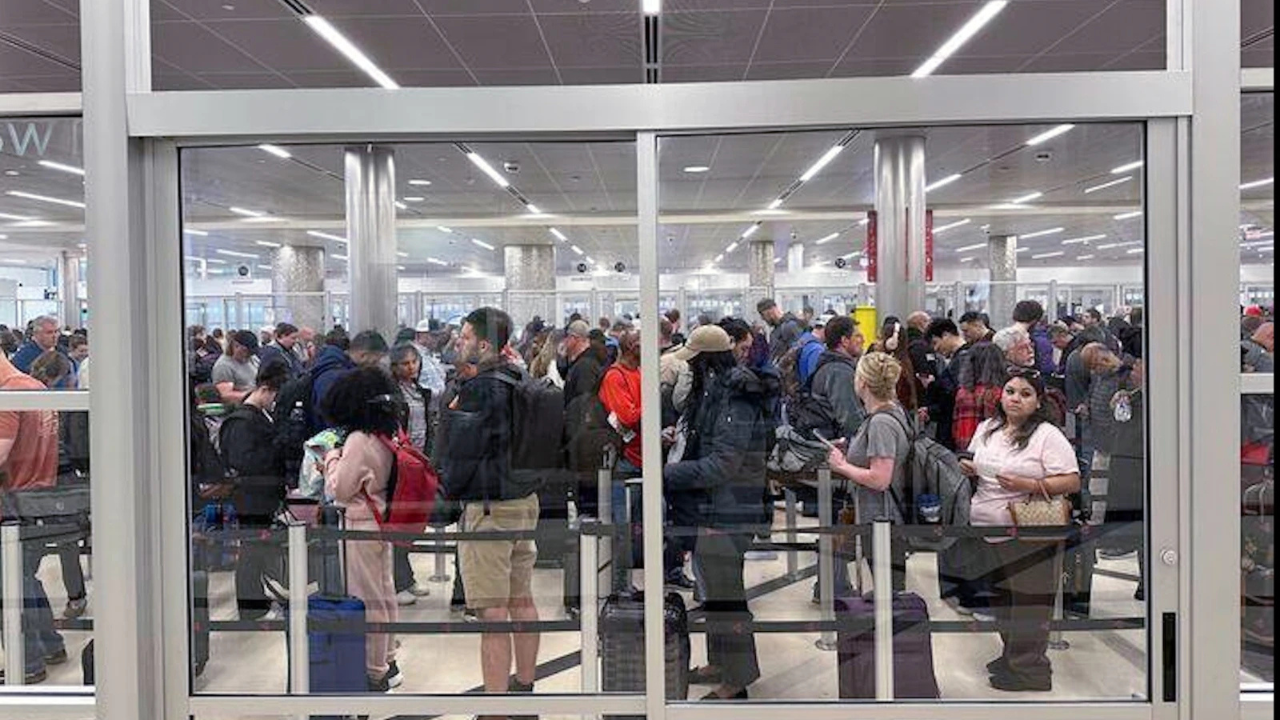
©(AP Photo/Emilie Megnien)
Vocabulary:
I will read the words, meanings, and sample sentences. Then, repeat after me.
- disruption /dis-ruhp-shuhn/
[noun] – a problem that interrupts an activity or process
Flight disruptions caused long waits at the airport. - strain /streyn/
[noun] – pressure or difficulty caused by too much demand
The system faced strain during the busy season. - convergence /kuhn-VUR-juhns/
[noun] – the situation in which things come together
The convergence of events created major problems. - mandate /MAN-deyt/
[noun] – an official order or instruction
The agency issued a mandate for safety checks. - deteriorate /dih-TEER-ee-uh-reyt/
[verb] – to become worse
Conditions began to deteriorate after the storm.
Article Reading:
Please read the whole article. Then, I will check your pronunciation and intonation.
Widespread flight cancellations and delays affected the United States on March 17 following severe storms that swept across major regions, creating significant disruption to air travel. More than 550 flights were canceled and over 460 delayed as heavy snow, strong winds, and potential tornadoes disrupted operations in key cities including New York, Chicago, and Atlanta. The situation worsened due to a government shutdown that placed additional strain on airport security staffing, coinciding with increased travel demand from spring break and major basketball tournaments. The convergence of these factors led to extensive delays at checkpoints and boarding gates nationwide.
Federal agencies responded by issuing operational mandates, including ground stops and delays at several major airports, to manage unsafe conditions caused by the storm system. Meanwhile, staffing shortages continued to deteriorate efficiency at security checkpoints, as unpaid Transportation Security Administration workers faced financial hardship. Reports indicated that some employees reduced working hours or left positions, contributing to longer wait times. Travelers were advised to arrive earlier than usual, with some airports recommending arrival at least three hours before departure. Industry analysts noted that the combined impact of severe weather and labor challenges highlights vulnerabilities in national travel infrastructure during peak periods of demand.
Federal agencies responded by issuing operational mandates, including ground stops and delays at several major airports, to manage unsafe conditions caused by the storm system. Meanwhile, staffing shortages continued to deteriorate efficiency at security checkpoints, as unpaid Transportation Security Administration workers faced financial hardship. Reports indicated that some employees reduced working hours or left positions, contributing to longer wait times. Travelers were advised to arrive earlier than usual, with some airports recommending arrival at least three hours before departure. Industry analysts noted that the combined impact of severe weather and labor challenges highlights vulnerabilities in national travel infrastructure during peak periods of demand.
Discussion Questions:
I will read each question. Then, please answer them.
- Have you ever experienced a flight disruption? If so, what happened? If not, what might be difficult about it?
- Have you ever waited a long time at an airport? If so, how did it feel? If not, what would you do during a long wait?
- Do you agree that governments should avoid shutdowns during busy travel periods?
- What is the biggest problem caused by flight delays?
- How can airports improve systems to handle emergencies better?
Summarization:
Please summarize the whole article using your own words and expressions. You will have one minute to prepare before you answer.
Describe:
Please explain the definition of each word listed below based on your understanding. You can provide example sentences if needed.
- widespread
- severe
- government
- ground stop
- financial hardship