©(AP Photo/Petros Karadjias)
Vocabulary:
I will read the words, meanings, and sample sentences. Then, repeat after me.
- invasive /in-VEY-siv/
[adjective] – spreading into an area where it does not naturally belong and causing harm
An invasive plant can damage local gardens and farms. - exacerbate /ig-ZAS-er-beyt/
[verb] – to make a problem or situation worse
Heavy traffic can exacerbate air pollution in large cities. - mitigate /MIT-i-geyt/
[verb] – to reduce the negative effects of a problem
New safety rules were introduced to mitigate workplace accidents. - resilient /ri-ZIL-yuhnt/
[adjective] – able to recover or stay strong after difficulty
Small coastal businesses remain resilient despite repeated storm damage. - sustainable /suh-STEY-nuh-buhl/
[adjective] – able to continue over time without causing harm
Sustainable farming helps protect land for future use.
Article Reading:
Please read the whole article. Then, I will check your pronunciation and intonation.
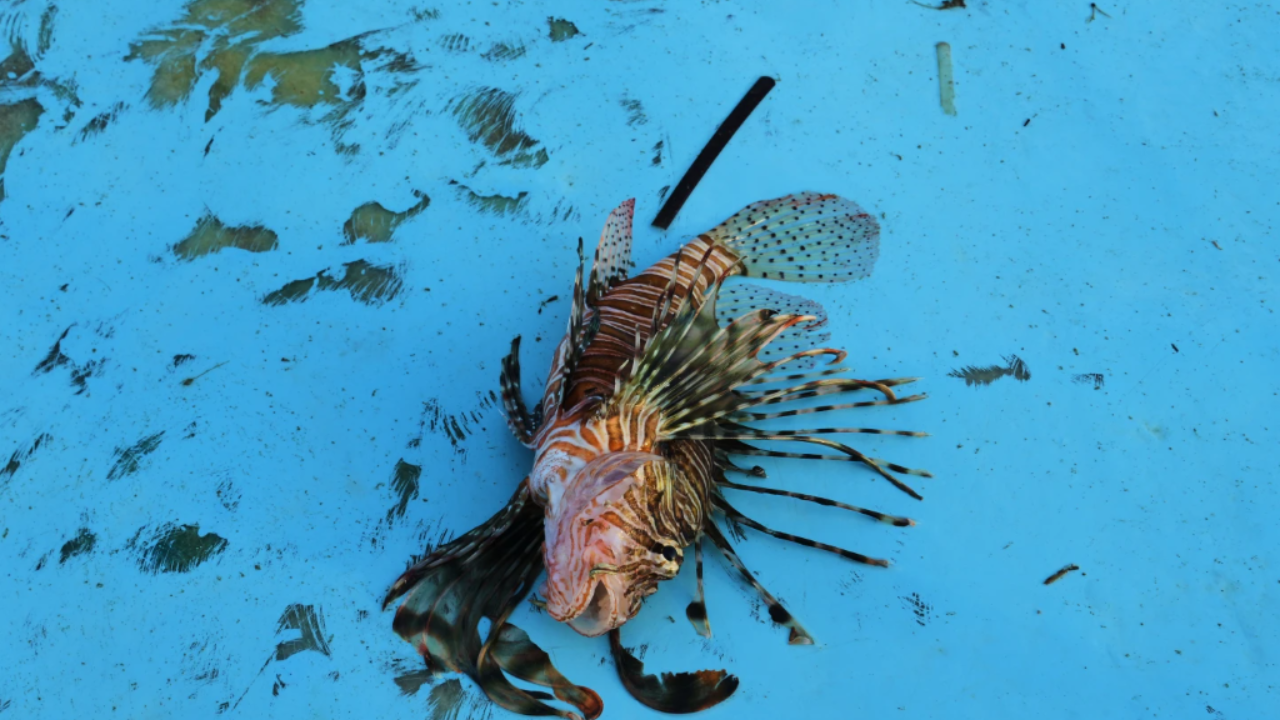
In recent years, invasive fish species have become a serious concern for coastal fishing communities in the eastern Mediterranean. The issue has been reported most clearly around Cyprus, where warmer sea temperatures and human-made waterways have changed marine conditions. Since the 2010s, species such as lionfish and silver-cheeked toadfish have entered Mediterranean waters from the Red Sea. Scientists link this movement to rising sea temperatures and the expansion of the Suez Canal, which allows new species to travel more easily. Marine researchers warn that this process may exacerbate pressure on native fish populations that support local fisheries. Surveys conducted by regional fisheries departments show a sharp decline in traditional catch species near Larnaca, a coastal city once known for rich fishing grounds. This development threatens economic stability for professional fishermen and raises concerns about long-term food security in the region.
Efforts to respond to the problem focus on control rather than removal. European programs offer incentives for catching toxic toadfish, which are removed to slow population growth. These actions aim to mitigate damage to fishing equipment and reduce losses. Another approach targets the proliferation of lionfish through removal by divers in reefs and protected areas. Research suggests repeated removal can help native species remain resilient. A development involves promoting lionfish as a food option after proper preparation, which may support a more sustainable fishing model. Fisheries specialists state that acceptance of invasive species as food could reduce harm and support economies.
Efforts to respond to the problem focus on control rather than removal. European programs offer incentives for catching toxic toadfish, which are removed to slow population growth. These actions aim to mitigate damage to fishing equipment and reduce losses. Another approach targets the proliferation of lionfish through removal by divers in reefs and protected areas. Research suggests repeated removal can help native species remain resilient. A development involves promoting lionfish as a food option after proper preparation, which may support a more sustainable fishing model. Fisheries specialists state that acceptance of invasive species as food could reduce harm and support economies.
Discussion Questions:
I will read each question. Then, please answer them.
- Have you ever eaten a type of fish that was new or unusual to you? If so, what made you want to try it, and how did it taste? If not, would you like to try a new type of fish in the future? Why or why not?
- Have you seen changes in seafood prices or fish choices in markets or restaurants near you? If so, what changes have you noticed, and why do you think they happened? If not, how do people in your area usually choose fish or seafood?
- Do you agree that eating invasive fish can help protect the environment?
- How might invasive fish affect local food security in the long term?
- Which solution in the article seems most effective, and why?
Summarization:
Please summarize the whole article using your own words and expressions. You will have one minute to prepare before you answer.
Describe:
Please explain the definition of each word listed below based on your understanding. You can provide example sentences if needed.
- species
- concern
- scientist
- researcher
- population