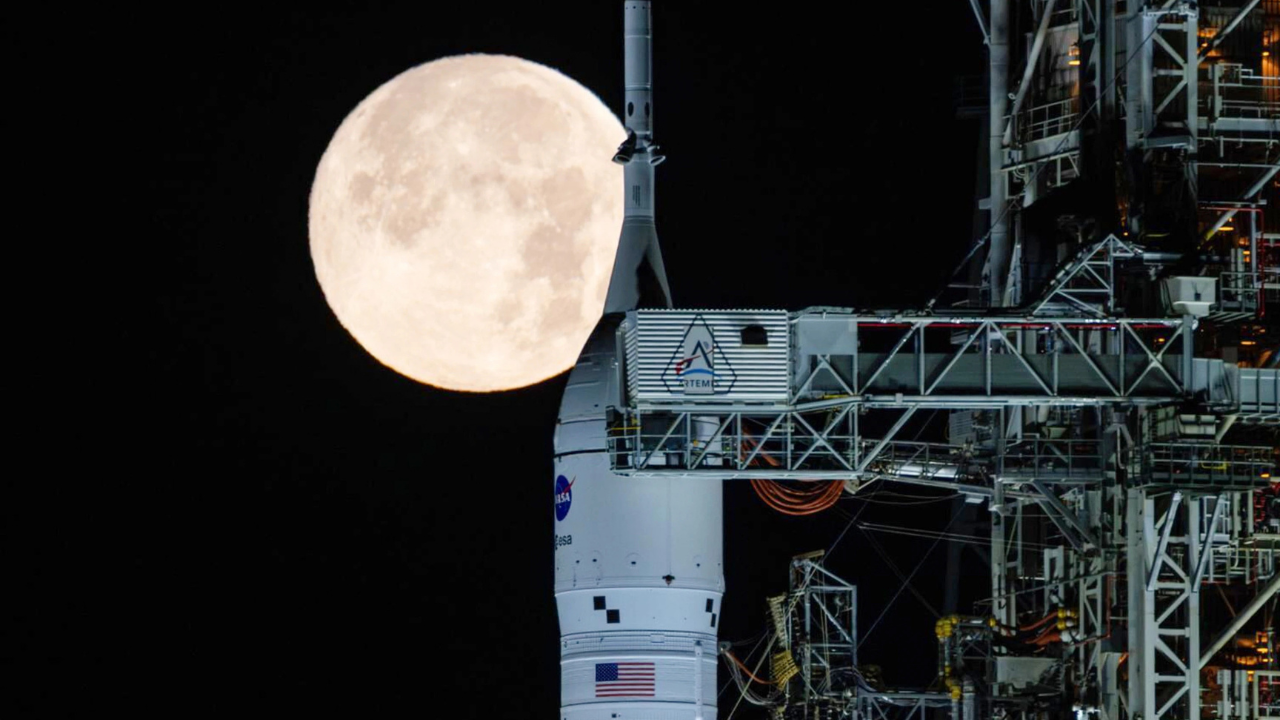
©(Sam Lott/NASA via AP, File)
Pre-reading Questions:
I will read each question. Then, please answer them.
- If you could visit the moon, what would you like to see or do there?
- What do you imagine rocks from space are like?
Vocabulary:
I will read the words, meanings, and sample sentences. Then, repeat after me.
- temporary /TEM-puh-rer-ee/
[adjective] – lasting for a short time
The problem was temporary and quickly fixed. - powerful /POU-er-fuhl/
[adjective] – having a strong effect or influence
The storm was very powerful last night. - protect /pruh-TEKT/
[verb] – to keep someone or something safe
Sunscreen helps protect the skin. - evidence /EV-i-duhns/
[noun] – facts that show something is true
There is strong evidence in the report. - region /REE-juhn/
[noun] – a particular area or part of a place
The northern region is very cold.
Article Reading:
Please read the whole article. Then, I will check your pronunciation and intonation.
Lunar rocks collected by Apollo astronauts many years ago are helping scientists better understand the moon’s magnetic field. A recent study from the University of Oxford shows that the moon’s magnetic field was usually weak but became very strong for short, temporary periods between 3 billion and 4 billion years ago. During these times, the field was even more powerful than Earth’s. Magnetic fields can protect planets from harmful radiation, so studying them is important for science.
Researchers studied earlier data and found that the magnetic activity changed depending on the amount of titanium in the rocks. This evidence came from samples collected during Apollo missions, especially from areas rich in titanium. Scientists believe volcanic activity brought these materials to the surface. Future Artemis missions will explore a different region of the moon, especially near the south pole. These new samples may help scientists understand how the moon’s magnetic field changed over time and give more information about space environments.
Researchers studied earlier data and found that the magnetic activity changed depending on the amount of titanium in the rocks. This evidence came from samples collected during Apollo missions, especially from areas rich in titanium. Scientists believe volcanic activity brought these materials to the surface. Future Artemis missions will explore a different region of the moon, especially near the south pole. These new samples may help scientists understand how the moon’s magnetic field changed over time and give more information about space environments.
Comprehension Questions:
I will read each question. Then, please answer them based on the article.
- What did Apollo astronauts collect?
- What did scientists discover about the moon’s magnetic field?
- When did strong magnetic activity happen?
- Why are magnetic fields important?
- What material in the rocks did scientists study?
Discussion Questions:
I will read each question. Then, please answer them.
- Have you ever learned about the moon in school? If so, what did you learn? If not, what do you want to know?
- Have you ever watched a space video? If so, what was it about? If not, would you like to watch one?
- Do you agree that space research is useful?
- What do you think about future moon missions?
- How can studying the moon help people on Earth?